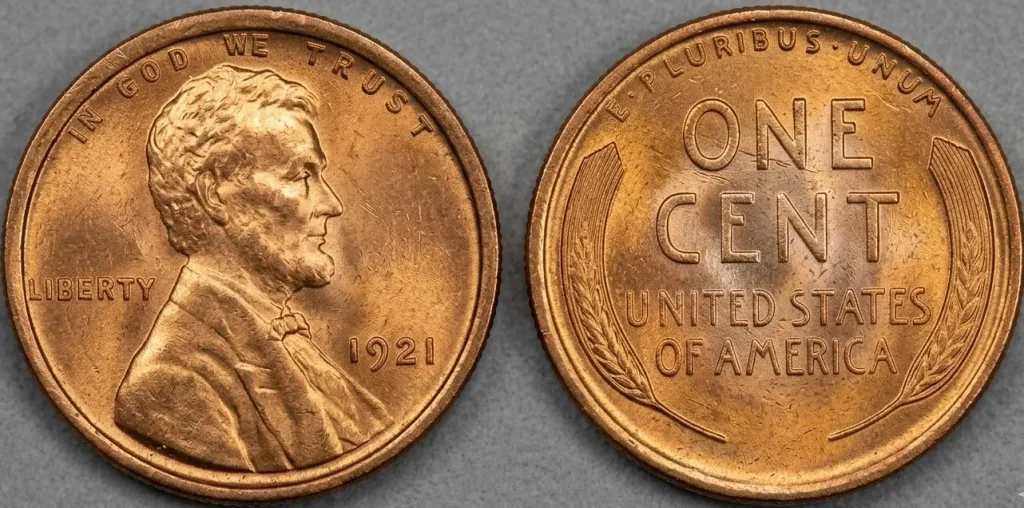
Production of the Lincoln cent in 1921 followed a significant post-war economic shift within the United States.
Market behavior observed in 2026 confirms that the condition serves only as a starting point for determining the actual 1921 Wheat Penny value.
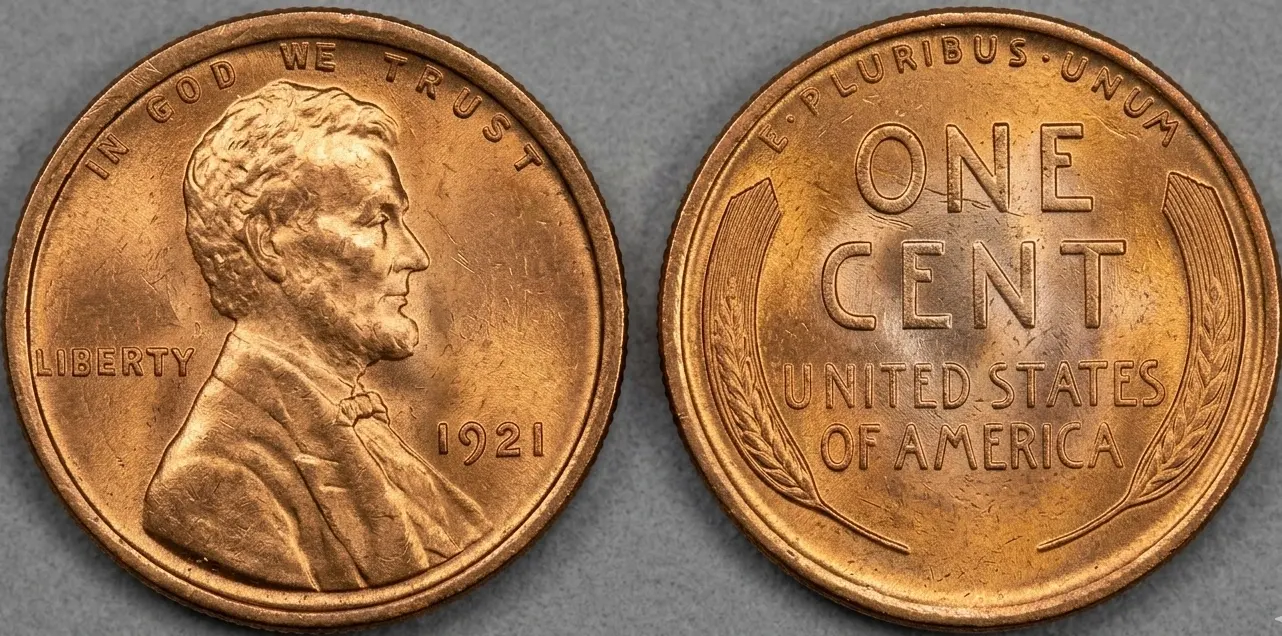
| Parameter | Specification |
| Mass | 3.11 grams |
| Diameter | 19.05 millimeters |
| Composition | 95% reddish metal, 5% hardening alloys |
| Edge | Plain |
| Designer | Victor David Brenner |
Utilizing a high-metal content alloy makes these surfaces highly reactive to environmental exposure.
Resulting surface color changes dictate the final assessment provided by professional certification services.
Mintage Statistics and Distribution
Total production in 1921 remains notably lower than the massive outputs seen in 1919 and 1920.
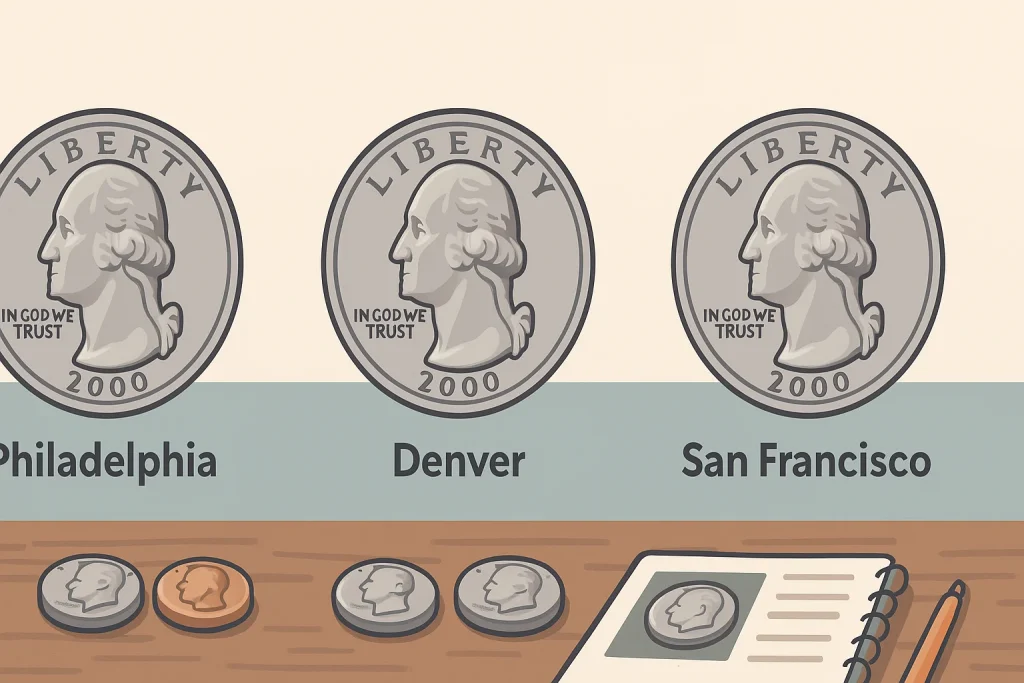
Minting distribution by facility:
- Philadelphia → No mint mark → 39,157,000 units
- Denver → D mint mark → 15,273,000 units
- San Francisco → S mint mark → 15,274,000 units
Low production numbers at the branch mints create a scarcity of high-grade specimens in today’s market.
Color Classification Standards
Professional grading systems utilize three distinct color designations for these copper-based coins.
Achieving a specific color label defines the maximum price potential for any given lot.
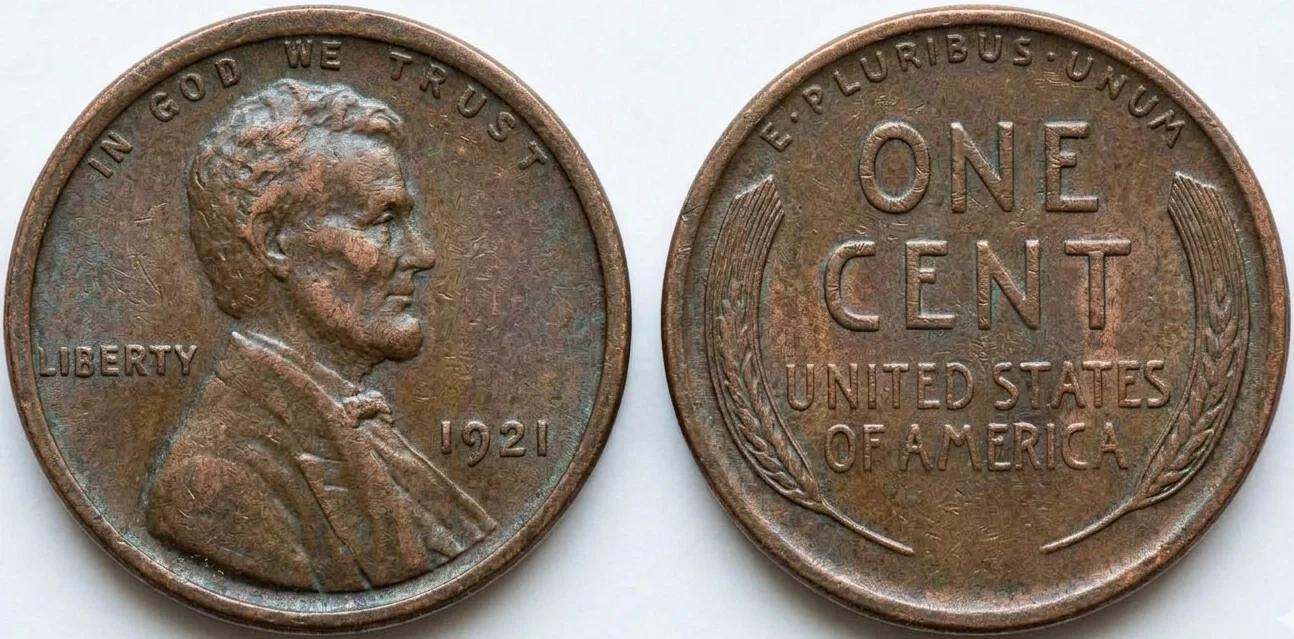
- Brown
Surfaces have lost more than 95% of their original mint luster.
Darker tones appearing due to prolonged contact with oxygen.
- Red-Brown
Displays showing a mix of original red color and darkened areas.
Red color coverage ranging between 5% and 95%.
- Red
Maintenance of over 95% of the original fiery mint brilliance.
Representing the highest value category during competitive bidding.
Price gaps between Brown and Red categories for identical grades often exceed 400%.
Market Metrics for 1921 Philadelphia (No Mint Mark)
Philadelphia issues lacking a mint mark represent the most common entries for study.
Pricing indicators for 2026 regarding standard certified examples:
| Grade | Brown Price | Red-Brown Price | Red Price |
| MS63 | $35 | $55 | $110 |
| MS65 | $95 | $160 | $420 |
| MS66 | $220 | $410 | $1,850 |
| MS67 | $950 | $2,100 | $14,500 |
Auction records for a Philadelphia specimen in MS68 Red condition reached $55,200.
Annual growth for the MS66 Red segment averages 4.2% over the current five-year cycle.
Detailed Analysis of the 1921-D (Denver) Issue
Denver strikes from 1921 frequently exhibit “mushy” or weak details on the reverse side.
Blurry lines on the wheat stalks reduce the final numerical grade assigned by experts.
Price dynamics for 1921-D:
→ Condition AU58: $38
→ Condition MS63 RB: $145
→ Condition MS65 Red: $1,150
→ Condition MS66 Red: $4,800
Price drops of 12% occur when dark corrosion spots appear on the obverse face.
Investment potential relies entirely on finding specimens free from mechanical distractions.
Scarcity of the 1921-S (San Francisco) Issue
San Francisco production remains the most difficult to source in pristine condition.
Worn dies used during production caused a lack of definition in Lincoln’s hair and beard.
| Grade | Current Market Value |
| EF40 | $18 |
| AU55 | $52 |
| MS64 Red | $1,950 |
| MS65 Red | $16,000 |
Record pricing for a 1921-S peaked at $54,625 for a coin graded MS66 Red.
Scarcity within the Red category triggers aggressive price spikes when new items surface.
Cause and Effect in Price Determination
Specific factors causing price deviations from standard catalog values and such details can be determined with the best coin appraisal app.
- Central detail strike quality → Weak pressure reducing value by 25%
- Presence of mint frost → Lack of frost moving the coin to the Brown category
- Contact mark placement → Scratches on the portrait decreasing value by 15%
- Patina consistency → Even rainbow toning potentially increasing value by 10%
Action-reaction model:
Finding a die crack → confirming authenticity → increasing interest in the variety.
Certification and Market Liquidity
Professional authentication through services like PCGS or NGC remains mandatory for transactions over $500.
Liquidity benefits provided by certification:
- Increased confidence in the stated preservation level.
- Protection of the metal from further darkening inside the holder.
- Ability to participate in global digital auctions without physical inspection.
Cleaning rejection statistics:
Approximately 18% of 1921 pennies submitted for grading show evidence of mechanical or chemical scrubbing.
Cleaning a coin → complete loss of numismatic premium.
Rare Varieties and 1921 Minting Errors
Technological failures during production created several unique collectible types.
Primary error categories:
- Off-Center Strike.
10% shift → $120 value.
50% shift with a full date → $850 value. - Die Cracks.
Raised lines appearing on the surface from broken dies.
Added value ranging from $15 to $50. - Lamination Error.
Metal layers peeling away from the coin core.
Pricing depends on the affected area, usually $25 to $100.
Combining multiple errors on a single coin increases the valuation exponentially.
Preservation Rules and Preventing Degradation
Copper remains an active material reacting poorly to humidity and skin oils.
Methods for maintaining value:
→ Utilizing acid-free paper envelopes for raw coins.
→ Storage in climate-controlled environments with low moisture.
→ Temperature maintenance between 18 and 22 degrees Celsius.
→ Regular usage of the coin appraisal app free.
→ Using moisture-absorbing packets to prevent spot growth.
Ignoring storage requirements → irreversible color shift from Red to Brown within 24 months.
Supply and Demand Analysis in the Current Market
Census data for 1921 coins in top-tier grades remains remarkably stable.
Population Report figures for grade MS66 and higher:
- 1921 (P): 482 units
- 1921-D: 114 units
- 1921-S: 32 units
Extremely low availability of the 1921-S in Red makes this asset resilient against market downturns.
Every new discovery in this class undergoes rigorous documentation in expert registries.
Market Forecast Leading to 2030
Predicting future price movements based on a decade of accumulated data.
Expected outcomes:
- Price stabilization for low to mid-grade circulated coins.
- 15–20% appreciation for specimens with exceptional original luster.
- Widening gaps between Red-Brown and full Red categories.
Purchasing Brown coins often yields poor returns due to excessive market supply.