Condition shapes the market price more than most beginners expect. Two coins from the same year can behave like they came from different worlds. One keeps its surface intact, the other shows wear or damage, and the value splits instantly.
A free coin value checker helps you see a general range, yet it cannot explain why collectors pay more for one example and ignore another. Small changes in texture, color, and relief tell the real story. Wear, damage, and natural toning work together, shaping a coin’s appearance and price. Understanding these traits gives you a clear method to judge a condition without guessing.
What “Wear” Really Means: Understanding Circulation Loss
Wear is simply the loss of design from repeated contact. Every coin has high points that fade first. The rate of loss depends on metal softness, circulation time, and storage conditions.
Copper loses detail quickly. Silver holds relief longer but still shows smoothing on exposed areas. Nickel remains durable but reveals flattening on hair, feathers, and lettering.
On a Lincoln cent, wear appears first on Lincoln’s cheekbone and jawline. On a Mercury dime, it softens the hair above the forehead and the wing on the cap. On a Washington quarter, the eagle’s breast feathers flatten early.
Even light wear matters. A small amount of smoothing removes mint luster and changes the grade. This shift lowers value sharply in higher ranges. A coin with bright original texture belongs to a smaller group of survivors and receives stronger bids.
Wear is not damage. It is natural, predictable, and graded in clear steps. Still, it has a strong influence on the market because collectors pay premium prices for the sharpest remaining examples.
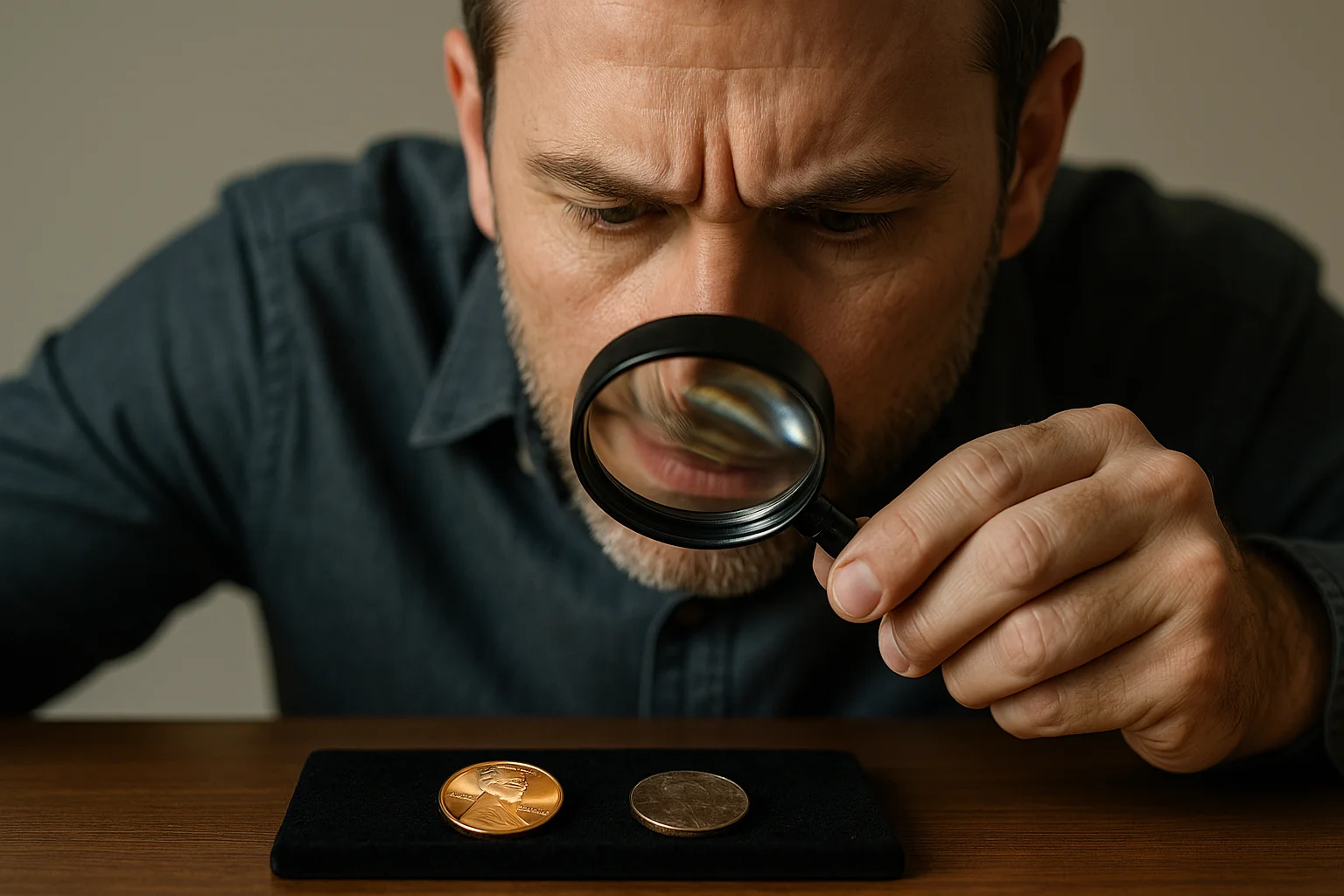
Damage: The Category That Instantly Reduces Value
Damage covers all forms of harm that occur after minting. It includes scratches, dents, corrosion, discoloration, and impacts from machines such as CoinStar. These marks cut through the natural surface and lower the value much faster than wear. Damage stays visible in every viewing angle, so collectors treat it as a permanent flaw.
Post-mint damage differs from striking defects. A clipped planchet or off-center strike is a mint error and can raise demand. A deep line from rough handling cannot. Buyers judge damaged coins strictly because no restoration returns the original texture.
Typical types of damage collectors look for:
- Scratches across fields or devices
- Heavy contact marks from other coins
- Rim dents and flattening from impacts
- Chemical stains from cleaning agents
- Corrosion from moisture or burial
- Machine damage from counting or sorting equipment
- Harsh polishing and abrasions
Examples appear often. A Morgan dollar with a deep scratch across the cheek sells at a heavy discount. An Indian cent exposed to moisture develops a rough surface that reduces detail and appeal.
A Jefferson nickel with a rim hit may look intact in hand, but fails grading standards under proper light. Rare dates still find buyers, but the flaw dictates the final price more than the rarity itself.
Natural Toning: When Color Adds Value Instead of Reducing It
Toning forms as metal reacts with air, humidity, or storage materials. Natural toning creates soft layers that protect the surface and add visual depth. Collectors value it because it signals age without mistreatment. Balanced color improves texture and highlights detail.
Silver often turns gold, blue, or violet. Nickel shifts to gentle gray. Copper darkens into brown, mahogany, or deep red-brown. These shades build slowly and indicate stable storage conditions.
Main traits that signal natural toning:
- Gradual color transitions
- Uneven but harmonious distribution
- No film-like shine or chemical brightness
Artificial toning behaves differently. Colors look too intense, too uniform, or sit above the metal as a thin layer. This type of color masks hairlines and signals manipulation, so collectors avoid such coins. Examples show the contrast well: a Franklin half with gentle gold tones sells faster than a bright white piece with signs of cleaning. A Morgan dollar with rainbow arcs commands strong interest because such color forms rarely occur and only under long-term stable conditions. A Standing Liberty quarter with soft blue-gray edges shows natural age and gains steady demand.
Natural toning becomes an asset when it complements the design instead of hiding flaws. It must look subtle, original, and consistent with the metal’s expected aging.
How Wear, Damage, and Toning Interact
Wear, damage, and toning shape value together. A coin may show slight smoothing yet still look attractive thanks to clean surfaces and gentle patina. Another coin may show full detail but lose value due to harsh cleaning or visible scratches.
Collectors prefer surfaces that age naturally. Light wear with natural patina suggests honest history. Harsh cleaning removes oxidation and exposes raw metal. It creates hairlines that break the surface under strong light and destroy eye appeal.
A comparison helps explain this interaction:
Morgan Dollar 1881-S
Piece 1:
Light, even wear on high points. Stable gold patina from natural storage. No signs of cleaning. The surface looks calm, the luster remains soft and original. This example holds a stable market price because collectors value authenticity and balanced toning.
Piece 2:
Harsh cleaning produced a bright artificial shine. Numerous hairlines appear when tilted under light. Relief remains decent, yet the surface looks disturbed. This example sells for two to three times less because cleaning signals interference and long-term instability.
The market consistently favors the first coin. Age is acceptable; manipulation is not.

Surface Texture and Strike Strength: Why Two Coins With the Same Grade Look Different
Strike quality shapes texture. A strong strike leaves crisp edges, deep lines, and raised details. A weak strike softens high points even when the coin is uncirculated. Weakness can mimic wear, causing beginners to misjudge the condition.
Texture helps separate wear from strike. Original mint flow lines create cartwheel luster on silver and nickel coins. Cleaning breaks this pattern and produces dull, uneven shine.
A Peace dollar often shows flat hair due to weak dies, not wear. A nickel scrubbed with an abrasive cloth may look shiny, but reveals uniform hairlines on the surface. A Morgan dollar with natural cartwheel luster appears lively even with small marks.
The eye reacts quickly to texture. Smooth natural surfaces feel stable. Disturbed surfaces reflect light irregularly and lower desirability. Two coins in MS64 can look very different for this reason.
How to Compare Two Coins of the Same Year Correctly
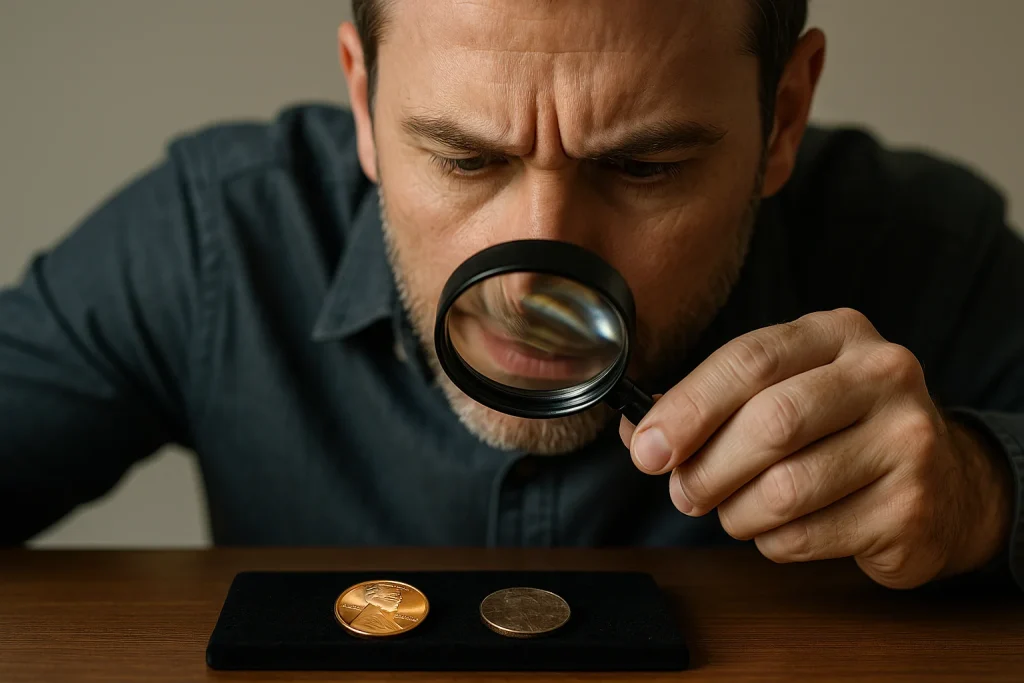
Comparison requires a structured approach. Start with high points, then check fields, rims, and luster. Look at color and tone because they influence how surfaces behave under light. Examine both coins under identical conditions.
Two Mercury dimes from 1943-S in AU illustrate this method:
Example 1:
Natural luster, soft wear on the highest curls, clean fields, stable silver tone. Surfaces look honest and consistent.
Example 2:
Cleaning streaks across the face, dull spots on the reverse, uneven brightness. Wear level is similar, but the overall appearance is lower.
The first example sells at the expected AU level. The second example trades at a discount because the surface looks altered. Condition requires more than grade; it needs inspection of tone, light behavior, and texture.
Collectors choose eye appeal when differences in wear are small. A coin with balanced surfaces remains liquid and predictable in value.
Practical Checklist: How to Judge Wear, Damage, and Toning
But if you are just a beginner, to judge tone, wear, and surface issues, it will be helpful to follow a fixed routine. A structured approach prevents rushed decisions and keeps attention on details that influence price the most. Each step below highlights what collectors look for when separating stable, problem-free coins from pieces with defects that limit value.
☐ Check the high points for smoothness and flattening.
☐ Search for scratches, corrosion, rim dents, or spotting.
☐ Distinguish natural patina from artificial color.
☐ Examine the coin sideways under a focused light source.
☐ Compare with certified examples for reference.
☐ Write down observations to track changes between coins.
☐ Confirm market behavior for similar conditions.
This checklist works for any circulation coin, regardless of metal or series. It keeps grading consistent and helps you see small differences that shape the market price. With practice, these steps become automatic and make condition analysis faster and more reliable.
FAQs
- How can I quickly learn the approximate value of a coin?
You can use a coin identifier app to get the type, metal, year range, and rough price category. It provides fast orientation, yet the final value still depends on condition, surface texture, and tone.
- How do I tell wear from a weak strike?
Weak strikes lack detail in specific areas but keep original luster across the surface. Wear breaks the luster and smooths metal on high points.
- How do I know if toning is natural?
Natural toning forms gradually, shows gradual transitions, and follows the metal’s structure. Artificial toning looks abrupt or overly colorful.
- Why does cleaning reduce value?
Cleaning breaks surface texture, exposes raw metal, creates hairlines, and signals interference.
- Can damaged coins be restored?
Restoration rarely helps. Damage remains visible and continues to lower value.
- Which defects are acceptable for most collectors?
Minor contact marks and small circulation rub are acceptable. Cleaning and corrosion are not.
Final Points
Condition shapes price because every change on the surface affects how a coin looks and how collectors react to it. Light, honest wear keeps detail readable. Natural toning shows age and stability. Damage, cleaning, or harsh polishing pushes value down fast. With steady practice, good lighting, and side-by-side comparison, you start to read these differences without hesitation.
When you need a quick reference, a coin identifier app for Android and iOS can help. Tools like Coin ID Scanner give the basics right away: type, metal, size, and an approximate price range. This makes the first check easier and saves time. The final call still comes from you: looking at the surface, judging the texture, and understanding how wear, damage, and toning shape real market value.